Phone Vault
Bulk phone-number dedup & vendor-delivery tracking
Built by Esparks IT Solutions · architecture & delivery led by Faiz Akram
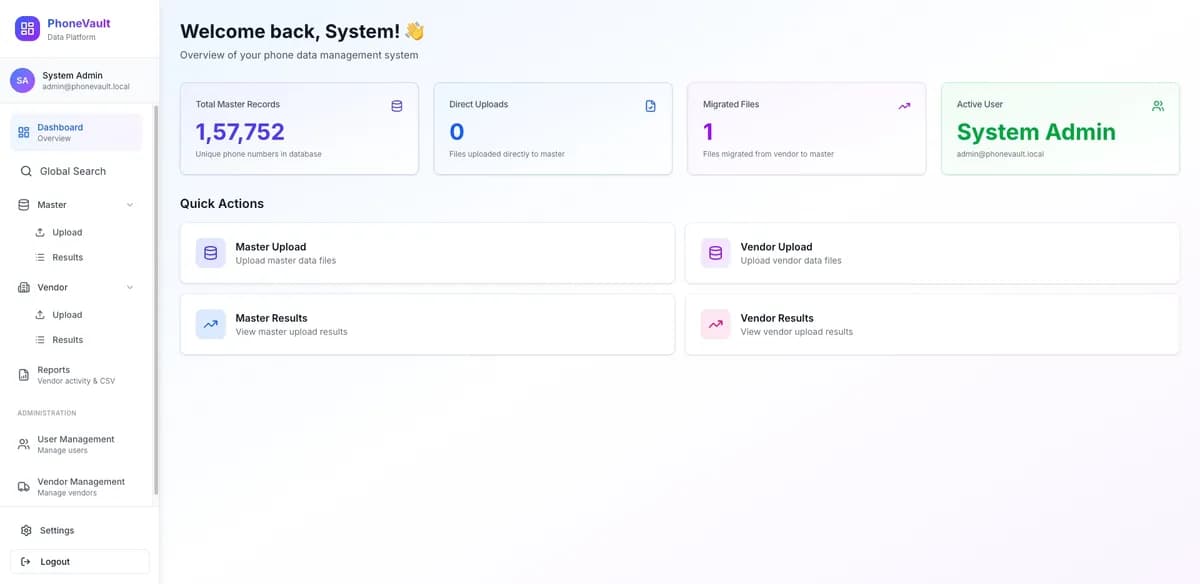
Phone Vault turns a folder of vendor CSV and Excel exports into one clean, deduplicated master list — with a record of who delivered which number, and whether it was actually new.
A data-operations platform for ingesting large CSV/Excel uploads, normalizing every number to real E.164 format, and deduplicating them against a vendor-agnostic master dataset — within-file, against master, and against a vendor's own delivery history. Staged uploads are reviewed then migrated to master, with exports and per-vendor duplicate/dispute reporting for teams managing high-volume phone data.
The Problem
A folder of vendor CSVs isn't a clean phone list.
The same number arrives twice
Without cross-referencing against what was already delivered, a vendor gets credited again for a number they sent last month.
Formatting is never consistent
One file has +91, another has a leading 0, another has spaces — comparing numbers as plain strings misses obvious duplicates.
Nobody can prove what was reviewed
Without a staging step, duplicate or bad rows get mixed into the master list with no way to tell which upload they came from.
A dedup pipeline that doesn't actually normalize phone numbers first isn't a dedup pipeline — it's a false sense of security.
How It Works
- 1.Upload a vendor file
- 2.Numbers get normalized
- 3.Three dedup checks run
- 4.Review in staging
- 5.Migrate to master
- 6.Report and export
Key Highlights
- Bulk CSV & Excel upload, chunked and cancelable, with real-time progress
- Real E.164 phone normalization (libphonenumber), not string stripping
- Three-tier dedup: within-file, against master, against vendor history
- Staging → master review flow with per-vendor duplicate/dispute reporting